
HIGHLIGHTS FOR THE SECOND HALF OF 2025: TECHNOLOGICAL ADVANCEMENTS & INTERNATIONAL COLLABORATION
Updated: Feb 9
During the second half of 2025, the Mekong Delta Living Lab project reached significant milestones in digital transformation, computational modeling, and the expansion of international cooperation networks.
1. Launch of Digital Transformation Platforms
Project Website (September 2025): ICOE, in collaboration with the MDP student group, officially launched the first version of the project website at livinglabmekongdelta.com.

Figure 1: Homepage interface of the Mekong Delta Living Lab website.
Database Management System (December 2025): Commenced pilot operation of the Mekong Living Lab Database Management System, enabling the storage and synchronization of all monitoring data and related reports.

Figure 2: Interface and functions of the Mekong Living Lab Database Management System.
2. Key Activities & Scientific Breakthroughs
Mastering 3D Coastal Modeling (Delft3D): Successfully established a dual-model system (FlowFM and Wave Model) covering the entire coastal waters of the Mekong Delta.

Figure 3: Computational results of flow fields and wave heights in the study area.
Fieldwork & Instrumentation: In early October 2025, Riverkin sediment sensors were installed at the Dai Ngai station (Soc Trang) to quantify sediment flux toward the Nha Mat and Vinh Chau regions.

Figure 4: Setup process of the sediment monitoring sensors.
Critical Finding: A long-term study (2020–2050) using the 2D Delft3D model indicated a concerning contrast: while climate change tends to push river systems toward equilibrium, human activities such as sand mining and hydropower production are causing severe instability.
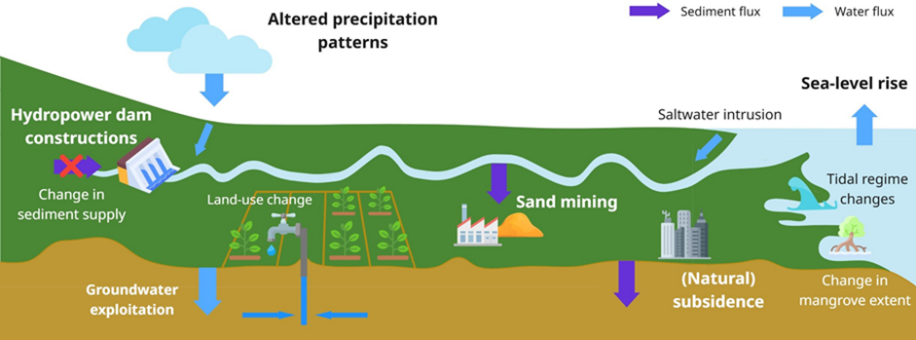
Figure 5: Diagram of factors influencing the Mekong Delta.
3. International Collaboration
MDP Project (September): Welcomed the Multidisciplinary Project (MDP) student group from the Netherlands to work directly at the Institute and Center.
Academic Supervision: In July and December, ICOE supervised graduate students Floor Machielse and Kim Vo in their research on plastic waste management and sediment dynamics.

Figure 6: Field surveys conducted by Kim Vo and Floor Machielse.
VietWater Conference (October 2025): ICOE and the Netherlands Embassy presented the project's latest findings to the international water sector community.

Figure 7: Presentation of the "Mangrove Living Lab" findings at VietWater 2025.
University of Copenhagen (Denmark): In December, the Institute supported a research group investigating Mekong Delta mangroves using remote sensing technology.
4. Future Outlook
Looking ahead, the project will focus on the following core areas:
Inundation Research: Assessing the specific impact of inundation duration on the survival and growth of mangrove forests.
Comprehensive Fieldwork: Implementing three major measurement campaigns (waves, currents, topography, and biomass) at four strategic sites in Soc Trang and Bac Lieu.
Advanced Modeling: Operating Coupled HD-Wave models to simulate complex interactions between waves and currents.
Digital Evolution: Upgrading the Digital Living Lab platform by localizing website content into Vietnamese and consulting with policymakers to enhance practical applications.


Comments